
As summer approaches and temperatures begin to rise, many gardens start to feel the effects of warmer, drier weather. Plants can quickly become stressed, weeds seem to appear overnight, and keeping borders looking healthy suddenly becomes much more time-consuming.
One of the simplest – and most effective – ways to protect your garden during the summer months is mulching!
Done properly, mulching can improve soil health, reduce maintenance, conserve moisture and help your plants thrive throughout the season.
What is Mulching?
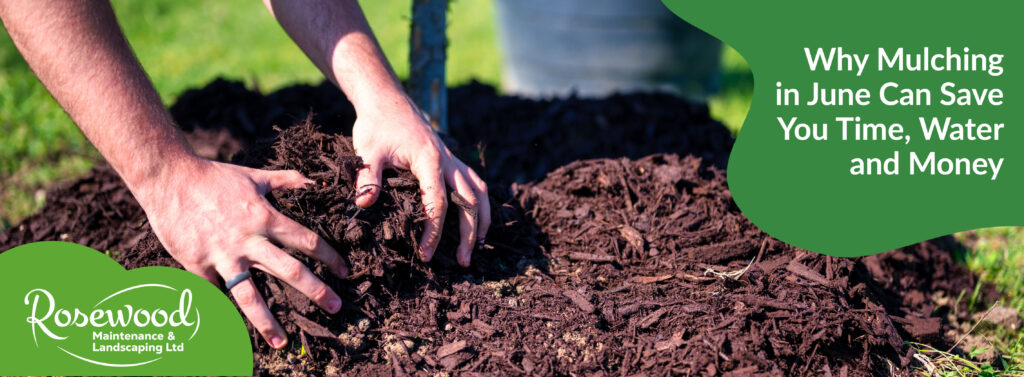
Mulching involves spreading a layer of material over the surface of the soil around plants, shrubs and flower beds. Common mulch materials include:
- Bark chippings
- Compost
- Leaf mould
- Well-rotted manure
- Wood chips
- Straw or organic garden compost
Decorative stone can also be used in some areas, although organic mulches offer the greatest benefits for soil health.


Why June is the Ideal Time to Mulch
By June, the soil has usually warmed up from spring, making it the perfect time to apply mulch before the hottest part of summer arrives. Adding mulch now helps:
- Lock moisture into the soil
- Reduce evaporation during hot weather
- Suppress fast-growing summer weeds
- Protect plant roots from heat stress
This means less watering, less weeding, and healthier plants throughout the season.
The Benefits of Mulching
Moisture Retention
One of the biggest advantages of mulching is its ability to retain moisture in the soil. Without protection, the sun quickly dries exposed soil, especially during warmer spells. Mulch acts like an insulating blanket, helping the ground stay cooler and damp for longer.
This can significantly reduce how often you need to water – particularly useful during dry summers or hosepipe restrictions.
Weed Suppression
Weeds compete with plants for water and nutrients, and they grow rapidly in June! A thick layer of mulch blocks sunlight from reaching weed seeds, making it much harder for them to germinate. Fewer weeds means less time spent maintaining borders, healthier plants and an overall tidier appearance.

Improved Soil Health
Organic mulches gradually break down over time, adding valuable nutrients back into the soil and improving its overall structure naturally. Healthier soil is better at retaining nutrients and moisture while still allowing proper drainage, creating the ideal environment for strong root growth. Mulching also encourages beneficial organisms such as earthworms, which help aerate the soil and improve its condition further. Over time, this creates a healthier, more resilient garden with stronger, better-performing plants.
Protection for Plants
Mulch also helps shield plant roots from temperature extremes.
During hot weather, exposed roots can become stressed very quickly. A protective mulch layer keeps soil temperatures more stable, helping plants cope better during dry periods.
This is especially important for newly planted shrubs, perrenials. vegetable gardens and young trees.
Why Professional Mulching Makes a Difference
While mulching may seem straightforward, applying it incorrectly can actually cause problems. Too little mulch While mulching may seem straightforward, applying it incorrectly can sometimes do more harm than good. Too little mulch offers limited protection, while applying too much can suffocate roots, trap excessive moisture and encourage rot or fungal disease. Using the wrong material, or placing mulch too close to plant stems and tree trunks, can also damage plants over time.
A professional garden maintenance service understands which mulch materials are best suited to different gardens and planting schemes, as well as the correct depth needed for maximum benefit. Professionals also prepare borders properly beforehand by clearing weeds and improving the soil where needed, ensuring a cleaner finish and longer-lasting results. As well as improving plant health, professionally mulched beds help give gardens a neat, tidy and well-maintained appearance throughout the summer months.
A Simple Step with Long-Term Benefits
Mulching is one of the most effective ways to reduce garden maintenance while improving the health and appearance of your outdoor space.
With the right approach, it can:
- Save water
- Reduce weeds
- Improve plant health
- Lower maintenance time
- Keep gardens looking better throughout summer
Whether you have a small garden border or larger landscaped areas, mulching in June is a simple investment that delivers benefits all season long! Get in touch to see how the Rosewood team can help you.